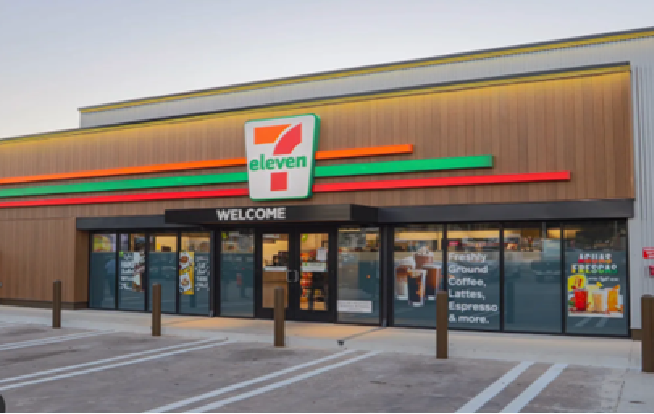
The news that 7-Eleven is shuttering 645 stores across North America has sent ripples through the retail and real estate sectors. On the surface, it looks like a retreat; however, if you apply the core philosophy of my book, Smart Retail, you’ll see a much more aggressive strategy at play.
Retail is no longer a game of total ubiquity; it is a game of total relevance. 7-Eleven isn’t just shrinking-it is evolving from a legacy “convenience” model into a high-margin, “food-forward” destination. Here is my analysis of this strategic pivot and what it means for the future of the industry.
1. The High-Margin Pivot: From “Smoke and Coke” to “Fresh and Fast”
In Smart Retail, I emphasize that the modern consumer doesn’t just want products; they want solutions. For decades, the American convenience store survived on the “Smoke and Coke” model-low-margin cigarettes, fuel, and soda. But that world is dying under the weight of declining smoking rates and volatile fuel margins.
7-Eleven’s decision to close older, smaller-format stores that cannot support commercial kitchens or video kiosks is a move toward Strategic Relevance. By focusing on made-to-order meals and custom beverages, they are transitioning from a “stop of last resort” to a “destination of choice.” If a store can’t support the “Theatre of Food,” it is no longer “Smart,” it’s a liability.
2. The Cultural Chasm: The “Konbini” Soul vs. The American Reality
To understand this move, we must look at the parent company, Seven & i Holdings, and the nuanced cultural difference in how we define “proximity.”
- The Japanese “Konbini” Culture: In Japan, a 7-Eleven is “social infrastructure.” In hyper-dense, pedestrian-heavy cities, proximity is measured in steps. The Konbini is an extension of the home kitchen, offering gourmet-level fresh meals delivered multiple times a day. It is a high-trust environment where you pay bills and ship luggage.
- The American “C-Store” Culture: In North America, proximity is measured in miles and minutes. The convenience store has historically been a “distressed purchase” location, a place you stop because the “low fuel” light came on. The food has traditionally been viewed with skepticism, famously encapsulated by the “roller grill” stigma.
The Pivot: Seven & i is attempting to “Japan-ize” the American experience. However, they’ve realized that the “American Konbini” cannot survive in the cramped, 1980s-era “snack sheds” of the past. To win in America, Smart Retail requires enough physical “square-footage-per-customer” to house a commercial kitchen and a frictionless drive-thru.
3. The Buc-ee’s Effect: When the Standard Becomes “Theatre”
The competitive landscape has been disrupted by the “Buc-ee’s phenomenon.” Buc-ee’s has proven that American consumers will drive past twenty “standard” convenience stores to reach one that offers Retail Theatre, immaculate restrooms, Texas-sized snack aisles, and fresh-chopped brisket.
- Buc-ee’s Strategy: The “Super-Destination.” Massive footprints that win through scale and spectacle.
- 7-Eleven’s New Strategy: The “Neighborhood Kitchen.” High-tech, localized, and ultra-efficient.
7-Eleven is essentially trying to “Buc-ee-ize” the suburban corner store. They cannot build 50,000-square-foot stores in every zip code, so they are doing the next best thing: pruning the locations that don’t fit the “food-forward” prototype and reinvesting in stores that can offer the quality and service today’s “convenience” shopper demands. They are moving from Quantity of Locations to Quality of Experience.
4. Operational Agility: The Art of Strategic Surgery
In Smart Retail, I discuss the “Operational Excellence” pillar. Holding onto underperforming assets “just because” is a retail sin. 7-Eleven is currently performing Strategic Surgery.
By closing stores where the gas canopy is the only thing keeping the lights on, they are shedding the weight of low-margin legacy thinking. The decision to open 205 new stores from the ground up-built specifically for this food-forward model-shows they understand that you cannot simply “digitize” a store built for a previous generation. They are building for the 2026 IPO by proving their credit profile is backed by high-performing, modernized assets.
5. What This Means for Retail Leaders and Investors
This move is a wake-up call for any retailer clinging to a footprint that no longer serves the modern consumer’s “mission.” For net lease investors and retail managers, the lesson is clear: Look at the “Smart” metrics.
- Does the location allow for “Theatre” and “Experience”?
- Can the footprint support high-margin, fresh food infrastructure?
- Is the location a “Destination” or just a “Stop”?
The Verdict
7-Eleven is playing the long game. They are betting that the future of convenience is a high-margin, food-first destination that bridges the gap between the Japanese Konbini and the American Roadside stop.
While Buc-ee’s owns the highway, 7-Eleven is fighting to own the neighborhood. By closing 645 stores, they aren’t losing the race, they are shedding the weight of the past so they can outrun the competition in the future.
